What I gained from my month-long study abroad in Seoul, South Korea at Korea University.
Everything that I can remember…
During the summer of 2019, I took my first international journey to Seoul, South Korea. I was prepared, but not to the degree I wished for. On gazing at the receding ocean and the fluffy clouds, I felt bitter about all the things I had failed to do. I’m willing to share my experiences to help you learn how to make the most of your study abroad.
be prepared
Study abroad experiences take many tiny steps to be ready. Luckily, most program providers and universities will have dedicated check lists for students to complete before departure – some even have pre-decision check lists! These are mostly paper-work tasks that you may have to do:
- Statement of Purpose (what you plan to accomplish)
- Transcript
- Plan of Study (how many credits and what classes)
- Pre-Departure Credit Evaluation (make sure classes count)
- Housing Contract
- Personal Information
- Academic Information
- Program Provider Information
- Eligibility and Conditions
- Budget and Scholarships
- Billing Information
- Authorization Statement
- Education Abroad Agreement
- Power of Attorney (legal stuff)
- Smart Traveler Enrollment Program (STEP)
- Visa Application Information (longer than 90 days*)
- Orientation Meeting
- Adjustment to Cost of Attendance
- Acceptance Letter Upload
- Flight Itinerary
- CDC Information
- Vaccines, Tests, and Health Checkups
- Passport Information
AND I had to do another set for my program! On the bright-side I could more or less copy and paste the information. That said, it took a couple days of visiting various offices around campus between classes to get everything completed.
A couple of the items could only be completed at a later date; like the exact time period of the program, my flight itinerary, visa information*, and passport information* (if spending over 30 days in country or as required*). You don’t need to worry about those until around two months before the beginning of your program.
money
Budget! As if it was that easy. Most programs do not tell you enough about the costs upfront because it gets expensive and the price tag may dissuade too many people. For my month-long program through International Studies Abroad (ISA) the actual cost was around $8,800 while the expected cost was $7,180 and if I included things I specifically bought for the trip before-hand it comes to around $9,800 – yikes. One of the worst things was that I ended up spending $30 on ATM/foreign transaction fees (this cost was with minimal withdrawals).
Here is a breakdown of some costs using the official ISA Budget + some things that I think are essential:
- Program/Tuition: $5,450
- [University Study Abroad Fee: $150 (dependent upon university)]
- Passport: $110+ service fee (mine was $160 total)
- Visa (90+ days): $45+
- Flight: $1,300 (mine was ~$1,800)
- Adapter/Transformer: varies (but I spent about $40)
- Books and Supplies: $50
- Personal Expenses $125/week
- Travel: $10/week?(moderate travel; I don’t remember and didn’t write it down, so it may be off the mark)
- Meals: $90/week
TIPS!
Buy your airplane ticket using apps that track flight costs and make sure to clear your cookies before you actually buy it! The apps that I use are Student Universe* and Hopper…but I used Google Flights to book the actual ticket for my month-long study abroad.
*I used Student Universe for my study abroad in Spring 2020 – in the time of COVID-19 and had to leave early because of it. I do not recommend using them in uncertain times. In regular situations you can get a good deal but it cost me more money using them than if I had booked directly with an airline.
Make sure any reservation you get is low priced and/or will get you point rewards – especially if you even slightly think you may go abroad again!
Order foreign currency from your bank before you go, I recommend getting about $300-$500 worth of foreign currency in varied-size bill denominations.
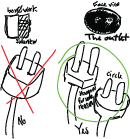
Adapter/Transformer needs to have long prongs that stay put if it is square or have a circular or hexagonal shape (circular is preferred and no square boxes or it will not work in the dorms – at least not in the Anam Dorm or CJ International – I wasted money buying ones that did not work!)
acquire passport
If you don’t already have one or haven’t a clue on how to get a passport, here is some information for people in the U.S/U.S. citizens. United States Postal Offices that are larger should have a passport service. I was able to get my passport renewed at my university passport office with an appointment, paperwork, and $160 ($110 renewal fee + $15 photo + $35 acceptance fee). For some reason they only take checks and cash as payment – so be warned about weird payment options. Here is a list of forms and other “evidences” you need:
- Passport Application: DS-11 (new passport) or DS-82 (renewal)
- Citizenship Evidence: passport (if renewal), birth certificate (many requirements)
- Photo Identification: probably a driver’s license, (needs to be government issued)
- Passport Photo: 2 in by 2 in; 25-35 mm face
add visa (90+ days)
I’m including this because I’m working on it for my semester-long study abroad (also with ISA at Korea University). I think most consulates/embassies in the U.S. should have the same rules for a particular country, but for the sake of having accurate, specific information, my district’s consulate is in Chicago. Here is the information for visas and here is information specifically for study abroad visas (D-2) from the Chicago’s Korean Consulate website. The link is a good resource if you are not a U.S. citizen or have other special documentation needs. Visa Application Paperwork (2019) – ISA will send a helpful form to fill it, but it is fairly self-explanatory:
$45 in cash (in person application) or via a money order* (mail-in visa application)
*Money orders can be bought at post offices – I don’t know if the size of the post office matters, but if you need a passport/visa picture taken anyway at a post office you can probably buy one while you are there.
Picture taken within six months; 35 mm by 45 mm and a face 25 mm by 35 mm (I had to make an appointment at my university passport office and pay $15 for the photos. Some U.S. post offices should have photo services as well as CVS or other convenience stores)
Certificate of Admission and Certificate of Business (provided by ISA or the University directly)
Valid Passport (good for at least six months)
Pre-paid tracked mailing envelope (for the passport return; “tracked” means using FedEx or UPS) I ended up paying about $30 for ground shipping and packaging through UPS.
be focused
Trust the program – after all, you paid for it! ISA has excursions and other field trips that are built into their fees, so take advantage of the opportunities they give you. This is what we (with friends, with ISA, and with Korea University [KU]) did over four weeks:
Week 1 (June 21 – June 29)
- 6/22 – Fly to Seoul, ISA Pick-up, Check in to Dorms
- 6/23 – ISA Orientation
- 6/24 – Gyeongbok Palace (경복궁) tour, Insadong shopping, and Jogyesa Temple; Gwangjang Market
- 6/25 – Korea University Orientation, KYOBO Book Centre
- 6/26 – Korean Language Placement Test; First Day of Classes;
- 6/27 – Myeongdong
- 6/29 – Lotte World, Sulbing Melon Bingsu
Week 2 (June 30 – July 6)
- 6/30 – Hongdae, Meerkat Friends Cafe
- 7/01 – Korean BBQ near Campus
- 7/03 – Chicol Night at the Han River
- 7/05 – Twice “Yes or Yes” Flash Mob; Gangnam Kakao Friends Store
- 7/06 – Ewha Area, Myeongdong
Week 3 (July 7 – July 13)
- 7/07 – Watermelon (with watermelon as expensive as it is in Korea, yes, this qualifies as an event)
- 7/08 – Class Presentation; Sushi; Changgyecheon Stream
- 7/10 – A Night at the Changgyeong Palace
- 7/12 – Monster VR Zone and SM Town, K-Star Road
- 7/13 – Busan – Day 1
- Gukje and Jagalchi Fish Markets, Observatory, BIFF Square; Gamcheon Mural Village; Haedong Yonggungsa Temple; Night Sea, Challenge a Live Streamer to a Fight (support)
Week 4 (July 14 – July 21)
- 7/14 – Busan – Day 2
- Haeundae Beach, Nurimaru APEC House, Haemul Pajeon
- 7/16 – Namsan Tower
- 7/17 – Farewell Dinner at Seasons Table
- 7/18 – KU Graduation; Noraebang
- 7/19* – Hanbok at Gyeongbok Palace; Han River Cruise and Seoul Night Market (KU/ISA event); Dorm check-out *last day of program
- 7/20 – Day at the COEX Atrium, COEX Aquarium; spotted Mamamoo; Gangnam hotel for a night
- 7/21 – Returned Home
**Options I didn’t partake in: Gangwon-do day trip 7/06; Nanta Theater KUISC event 7/19
Although I felt like I did a lot in my short time in Seoul, I failed to do some of the things that brought me there. For example, I wanted to have a Korean spa (찜질방) experience, eat spicy watermelon cold noodles (수박 냉면), buy celadon (청자) pottery, go bicycling around the Han river, and go hiking.
Make a bucket list, make it pretty, make it memorable, and put it everywhere – do what you need to do to make sure you carry through with it. Big things, small things, anything that makes the plane ticket worth it.
Go out and do things, try to make it work. One night, my group of friends and I tried to go to the Night at the Palace and we almost turned around because we thought we wouldn’t make it. We persevered, with some persuasion, and we were able to enjoy the night-time scenery of the palace. My friend who was the most insistent on us not being able to make it, was glad we tried when all was said and done. The day we went to the Gyeongbok Palace in hanbok was one of the hottest days of the program. I told myself and the other girls, “in 10 years I’ll forget what the temperature was like, how tired I was, and how stressed I was about leaving, but what I will remember is whether or not I did it. If I don’t do this, I will regret it and wonder why I didn’t do it.” That said, it was really HOT under all that fabric.
 Joy, To The World!